
NEW SCHOOL WISDOM GOLD MEMBERSHIP

The New School Wisdom Gold Membership unlocks exclusive digital playbooks, masterclasses, and strategic frameworks to elevate your mindset, relationships, wealth, and leadership.

INTRODUCTION From Emotional Survival to Clarity, Stability, and Personal Power
Before confronting manipulation, this opening frames the journey from confusion to structured strength. It explains how emotional chaos erodes identity and why clarity must replace reactivity. Readers are prepared to shift from coping mechanisms toward discipline, boundaries, and personal authority rooted in stability rather than emotional survival.
CHAPTER 1 The Silent Erosion
Gradually, confidence fades when psychological control replaces partnership. This chapter exposes how subtle criticism, blame shifting, and disguised dominance destabilize capable men. It reveals why intelligent husbands become trapped through empathy and over-responsibility, and how unchecked manipulation slowly dismantles identity, clarity, and internal trust.

CHAPTER 2 Gaslighting and Reality Distortion
Relentless reframing of facts creates confusion that feels disorienting and self-doubting. Here, gaslighting tactics are identified and decoded, showing how truth becomes negotiable inside narcissistic dynamics. Readers learn to separate emotional narratives from objective reality and rebuild confidence in their own perception.
CHAPTER 3 Trauma Bonds and Emotional Addiction
Unexpected attachment often strengthens under volatility rather than peace. This chapter explains trauma bonding, intermittent reinforcement, and validation addiction. It clarifies why intensity masquerades as love and how emotional dependency keeps men cycling through hope, disappointment, and renewed commitment despite repeated instability.
CHAPTER 4 Conflict Cycles and Escalation Patterns
Repeated arguments rarely resolve because the pattern itself is the point. This section maps predictable cycles of provocation, reaction, and blame reversal. Understanding escalation triggers allows husbands to interrupt reactivity and disengage from debates designed to exhaust, confuse, and dominate.

CHAPTER 5 Boundaries That Actually Work
Firm structure replaces emotional pleading when enforceable boundaries are introduced. The focus shifts from explaining feelings to defining consequences. Readers learn practical containment strategies that reduce chaos, reinforce self-respect, and prevent manipulation from thriving on inconsistency or overexposure.
CHAPTER 6 Communication Without Emotional Reactivity
Strategic neutrality becomes a tool for stability. This chapter teaches calm, concise responses that avoid fueling volatility. By eliminating over-explanation and emotional defense, husbands learn structured delivery methods that protect dignity and maintain composure during provocation.
CHAPTER 7 Emotional Regulation and Nervous System Stability
Chronic stress distorts judgment and erodes resilience over time. Here, emotional regulation techniques restore baseline calm. Breathing practices, routine discipline, and nervous system awareness help men respond deliberately rather than reflexively inside high-conflict interactions.
CHAPTER 8 Protecting Children From Emotional Fallout
Parental leadership must remain steady despite marital instability. This chapter outlines how to avoid triangulation, emotional dumping, and loyalty conflicts. Consistent routines, calm reassurance, and visible presence create security for children navigating unpredictable household tension.

CHAPTER 9 Smear Campaigns and Reputation Attacks
False narratives can weaponize perception socially and professionally. This section explains smear tactics and how composure protects credibility. Documentation, restraint, and strategic response prevent escalation while preserving long-term reputation and personal dignity.

CHAPTER 10 Financial and Legal Awareness
Preparedness replaces paranoia when financial clarity is established. Readers are guided to document involvement, understand regional custody structures, and safeguard resources responsibly. Calm awareness strengthens leverage without triggering impulsive or fear-based decisions.
CHAPTER 11 Leadership Without Aggression
Dominance is not discipline. This chapter distinguishes grounded authority from ego-driven control. By modeling calm consistency rather than emotional retaliation, husbands reclaim leadership rooted in structure, predictability, and integrity.
CHAPTER 12 Rebuilding Identity Beyond Approval
External validation loses power when internal standards are reinforced. The focus shifts toward eliminating shame narratives, fixer mentality, and over-responsibility. Identity reconstruction centers on sovereignty, self-governance, and confidence independent of marital volatility.

CHAPTER 13 Mental Health Protection and Daily Stability Rituals
Intentional routines create resilience under pressure. Journaling frameworks, structured mornings, and reflective evenings help stabilize emotional drift. Consistency compounds, transforming scattered coping into disciplined personal maintenance.
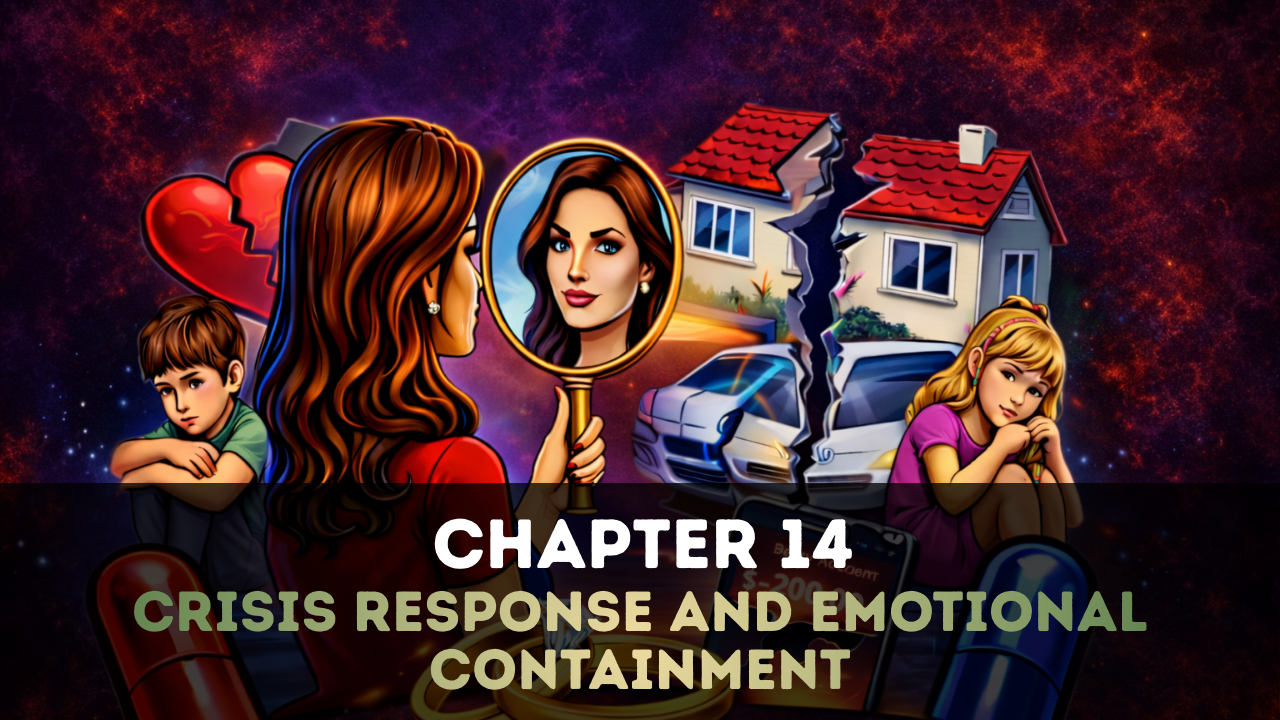
CHAPTER 14 Crisis Response and Emotional Containment
Preparation prevents panic when volatility spikes. This chapter develops response blueprints for sudden escalation. Neutral language, exit strategies, and documented communication reduce damage and protect long-term positioning.

Chapter 15 Separation With Composure and Strategy
Transition requires steadiness rather than impulsive reaction. Guidance here emphasizes preparation, documentation, and child-centered communication. Stability during separation reinforces credibility and minimizes emotional fallout.

CHAPTER 16 Dating After Narcissistic Marriage
Discernment replaces desperation when re-entering relationships. Readers learn to prioritize stability over intensity and mutual respect over chemistry alone. Healthy connection begins with restored standards and measured openness.

CHAPTER 17 Creating a Personal Code
Clarity strengthens when values are explicitly defined. Integrity, discipline, responsibility, and growth become guiding principles. A written personal code anchors behavior under stress and prevents regression into approval-seeking patterns.

Chapter 18 From Recovery to Expansion
Healing stabilizes foundations before growth accelerates. This chapter transitions from damage control toward long-term ambition. Career development, meaningful goals, and purposeful direction transform survival into forward momentum.

CHAPTER 19 Fatherhood Under Pressure
Presence matters most when conflict intensifies. Fathers are urged to remain reliable, emotionally steady, and child-focused. Consistency and restraint protect children’s attachment and model resilience through example.
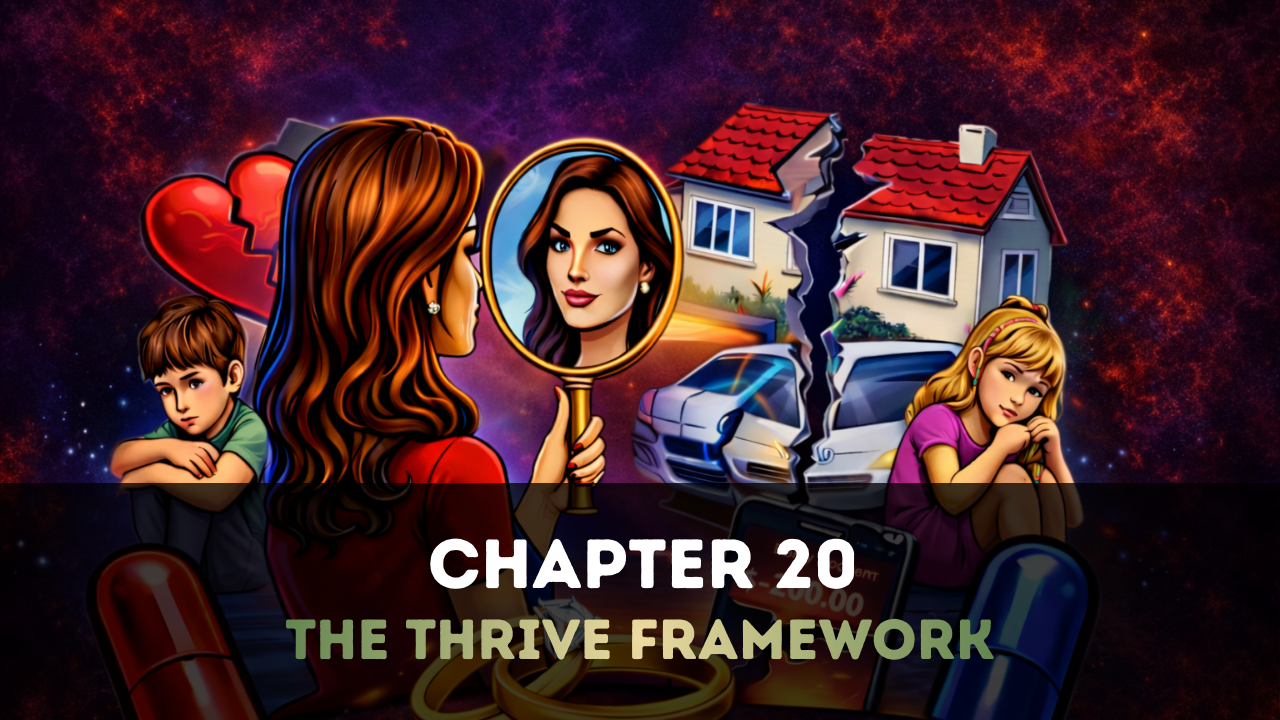
Chapter 20 The Thrive Framework
Structured daily discipline converts insight into authority. Morning routines, reflection, boundary audits, and weekly evaluation build compounding stability. Thriving becomes deliberate practice rather than emotional aspiration.

CHAPTER 21 The Masterclass Invitation
Finally, structured training extends beyond reading into repetition. This closing chapter introduces a comprehensive system designed to reinforce boundaries, communication discipline, emotional regulation, and identity rebuilding. Transformation becomes measurable through progressive modules rooted in calm authority and sustainable strength.